
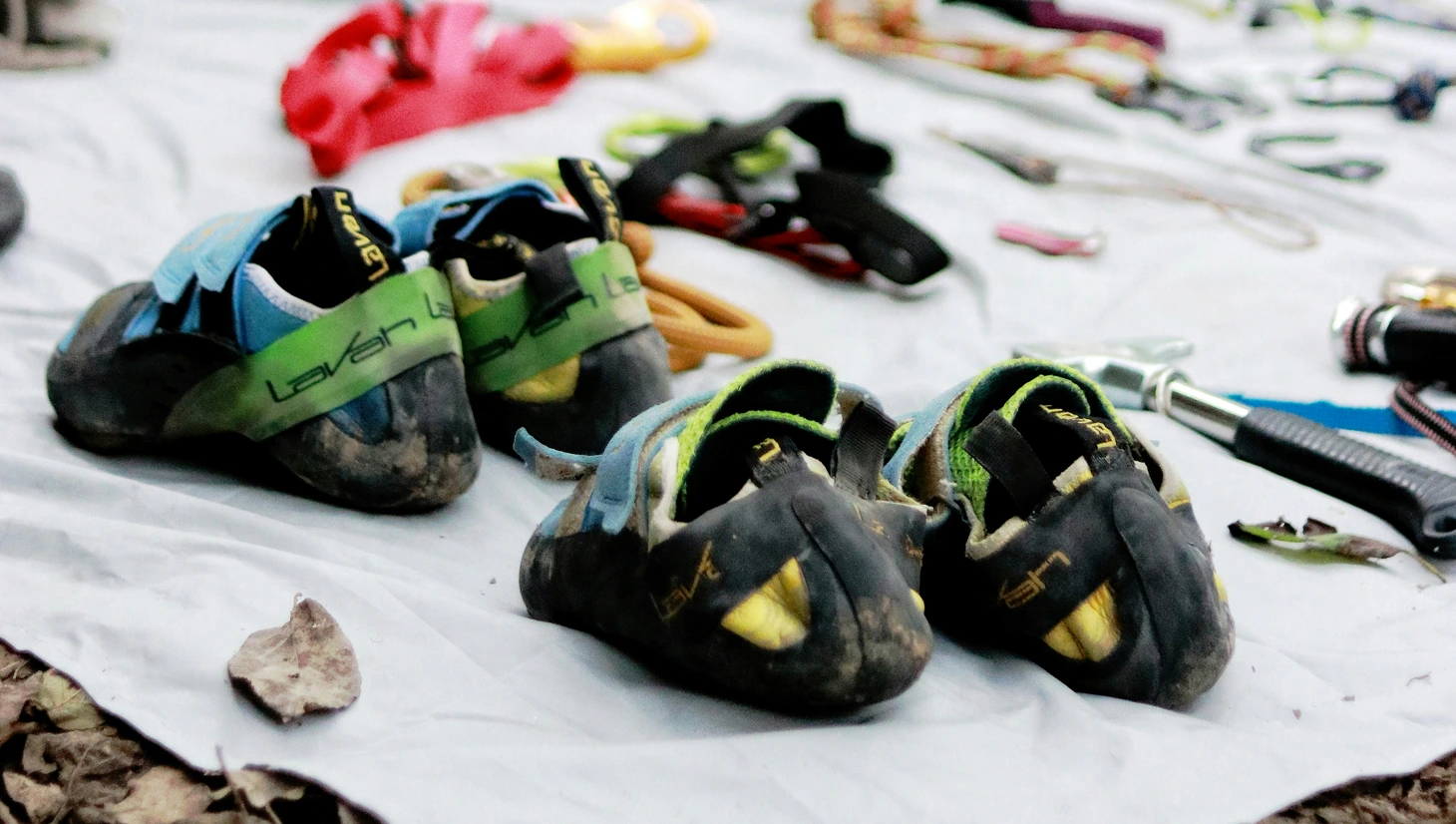
Climbing shoe sizing is confusing and the advice you'll find online doesn't always help. "Go two sizes down." "Size true to your street shoe." "Your toes should be screaming." A lot of it is either outdated, overstated, or aimed at a very specific type of climber doing a very specific type of climbing.
Here's a practical, honest breakdown of how to size climbing shoes — for different levels, different disciplines, and different foot shapes.
Why There's No Universal Answer
Climbing shoe sizing varies between brands, within brands, and even between models from the same brand. A size 42 in La Sportivaruns considerably smaller than a size 42 in Scarpa. A performance shoe from one brand may fit completely differently to a comfort shoe from the same brand in the same size.
This isn't poor quality control — it's by design. Different shapes serve different purposes, and the "correct" fit depends on your foot shape, your level, what you're climbing, and how long you're wearing the shoe in a session. There's no shortcut that removes the need to actually try shoes on where possible, but understanding the principles will get you much closer before you even touch a shoe.
Fit by Level
Your experience level should be one of the first things that shapes your sizing decision:
Leather vs Synthetic
Leather uppers stretch. Synthetic uppers mostly don't. This is one of the most overlooked factors in climbing shoe sizing and it can mean the difference between a shoe that fits perfectly after break-in and one that loosens up into something frustrating.
With a leather shoe, expect roughly half a size of stretch over the first ten to twenty hours of use. This means you should buy leather shoes slightly tighter than your target fit, knowing they'll open up. With synthetic shoes, what you feel in the shop is largely what you'll get — size to your target fit directly.
Breaking in leather: Some climbers wet their feet, put the shoes on, and wear them around the house to speed up the break-in. Others just climb in them until they conform. Either approach works. Just don't assume a leather shoe that feels slightly off on day one is a bad shoe — give it time before writing it off.
Foot Shape and Width
Brands design shoes around a "last" — a foot-shaped mould that determines the internal shape of the shoe. Some lasts are narrow and tapered. Others are wide and more accommodating. Buying a shoe shaped around a very different last to your foot is one of the most common sizing mistakes, and no amount of adjustment corrects a fundamental shape mismatch.
If you have a wide foot, look at Butora (specifically designed around wide toe boxes), Evolv's wider fit options, and Scarpa's medium-to-wide models. If you have a narrow foot or a pronounced heel, La Sportiva's snug heel cup construction tends to work well. Tenaya's adaptive fit design is worth exploring if you've had difficulty finding a consistent fit elsewhere.
Foot shape also matters. Egyptian feet (big toe longest) do well in most standard climbing shoe shapes. Greek feet (second toe longest) can sometimes benefit from a more rounded toe box. Roman or square feet often struggle in very pointed shoes and should look for flatter, more rectangular toe boxes at the front.
Shoes Worth Trying First
If you're unsure where to start, these three shoes are among the most consistently well-fitting options across different foot shapes: