
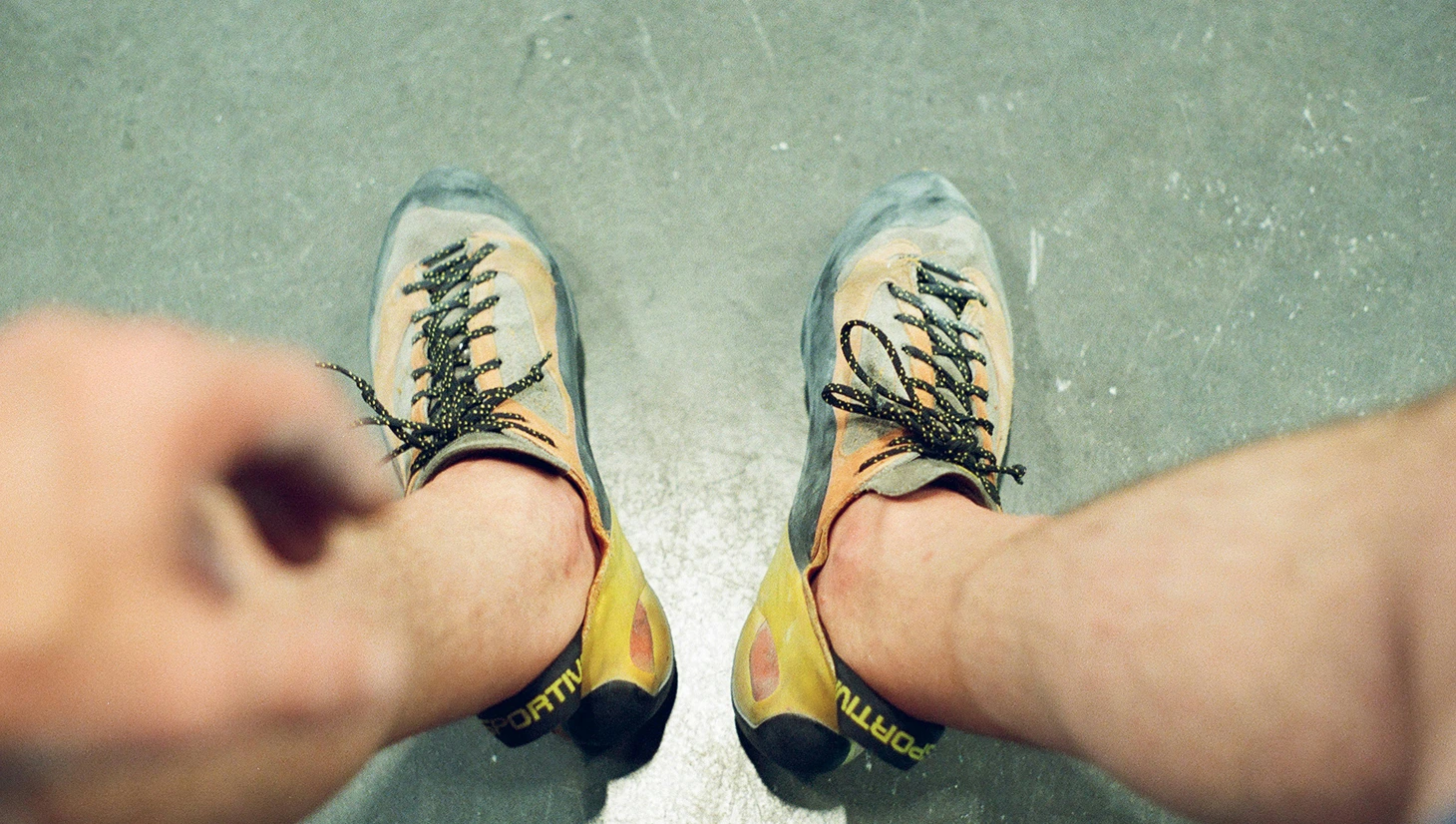
Most climbers wait too long to resole. They'll climb on a shoe until there's a hole through the rubber, the rand is fraying, and the upper is starting to separate — then they'll wonder why the cobbler can't save them. Resoling is one of the best things you can do for your shoes and your wallet, but timing is everything.
Here's how to read your shoes, when to take action, and what to expect from the process.
The Golden Rule
Resole before you reach the rand. That's it. That's the whole guide condensed into one sentence.
The rand is the thin rubber strip that wraps around the upper of your shoe. It's structural — it holds the shoe's shape, keeps the toe box rigid, and protects the stitching of the upper from abrasion. Once the rand is damaged, a resole becomes much more involved, more expensive, and in some cases impossible to do well. A shoe resoled before rand damage can realistically be done two or three times. After rand damage, you're often looking at a rebuilt shoe that will never quite feel the same.
Signs It's Time
Rubber wears from the front of the shoe outward. The big toe area goes first because that's where most climbers push into holds. Check these areas regularly:
Is It Worth Resoling?
For any shoe that costs more than about 80 dollars, yes — resoling is almost always worth it financially. A full resole from a reputable cobbler typically costs between 40 and 70 dollars, depending on whether you're replacing just the sole or the rand and sole together.
Beyond the money, a shoe you've already broken in is a known quantity. You know how it fits, where the pressure points are, and exactly how it performs. A resoled shoe that fits well is often preferable to breaking in a new pair from scratch.
The exception is a shoe that never really fit properly to begin with, or one that's been worn through to the point where the upper is compromised. In that case, use it as an opportunity to reassess what you actually want from your next pair.
Rubber choice on resole: When you send a shoe in for resoling, you can often specify the rubber compound. Some climbers choose to go slightly softer or stiffer than the original depending on how they climbed in that shoe. It's worth asking your cobbler what they stock.
Extending Rubber Life
A few habits make a real difference to how long your rubber lasts. Brush your shoes before climbing — grit and chalk act as an abrasive and grind the rubber down faster. Avoid walking around in your climbing shoes on rough ground. Take them off between burns rather than shuffling around on abrasive surfaces.
Temperature matters too. Climbing in extreme heat softens the rubber and accelerates wear. Hot days on dark-coloured stone are particularly hard on soles. It doesn't mean don't climb, just be aware that summer sessions will burn through rubber faster than winter ones.
Rotating between two pairs of shoes — especially if you climb multiple days a week — also helps each pair last longer. The rubber has time to cool and reset between sessions, and you're distributing the wear across both shoes rather than grinding one pair into nothing.